
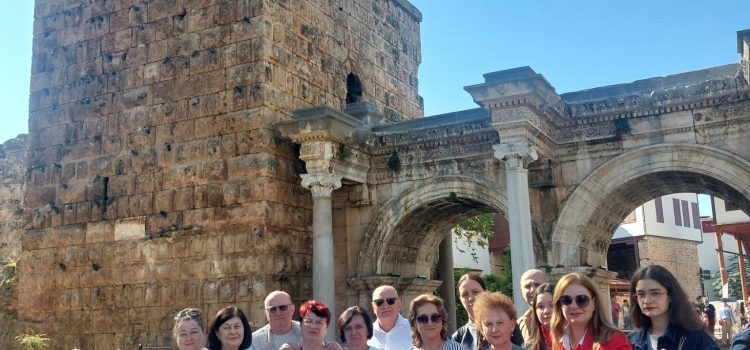
Supporting Seniors During an Erasmus+ Mobility in Antalya: A Journey Towards Active and Healthy Ageing
An Erasmus+ mobility in Antalya, Turkey, brought together senior participants for five days of learning, physical activity, cultural exchange and social connection. Organised by Branart Cultural Association, the programme promoted active and healthy ageing through inclusive educational activities and international cooperation.
As an accompanying person, I had the opportunity to support a group of older adults during this Erasmus+ mobility, organised under project number 2026-1-RO01-KA121-ADU-000416296.
The activities were hosted by Güre Healthy and Natural Life Association in Antalya, Turkey, with a focus on well-being, lifelong learning and active ageing.
My main responsibility was to ensure that every participant could engage fully, comfortably and safely in the programme, regardless of age, physical abilities, health conditions or previous experience.
Throughout the five days, the participants took part in wellness sessions, educational workshops, adapted physical activities, nature walks and cultural visits.
The programme also reflected four important Erasmus+ priorities: inclusion and diversity, digital transformation, environmental sustainability and international cooperation.
A Welcoming and Inclusive Start to the Erasmus+ Mobility
The first day focused on creating a welcoming, accessible and supportive environment for all participants.
Following registration, the host organisation introduced its activities, objectives and involvement in European cooperation through Erasmus+.
Interactive ice-breaking activities, including name games, paired interviews and Find Someone Who, encouraged participants to communicate, share experiences and build new relationships.
To overcome potential language barriers, instructions were presented visually and in clear, simple English. I provided translation and individual support whenever necessary, particularly for participants who felt less confident communicating in a foreign language.
Together, the group established basic principles of mutual respect, inclusion, cooperation and personal safety.
The day concluded with a gentle seaside walk and stretching exercises, allowing participants to relax and become familiar with their new surroundings.
Promoting Active and Healthy Ageing Through Practical Learning
Physical well-being was an essential part of the Erasmus+ mobility programme.
Each morning began with activities adapted to older adults, including guided breathing exercises, gentle yoga, tai chi, stretching and coordination exercises.
The sessions were designed to accommodate different levels of mobility and physical fitness. Participants were encouraged to remain active at their own pace, without pressure or unnecessary physical strain.
Three educational workshops formed the foundation of the learning experience.
Active and Healthy Ageing: Developing Everyday Healthy Habits
The first workshop encouraged participants to reflect on their daily routines and identify opportunities to improve their physical well-being.
Through practical demonstrations and group discussions, they explored simple exercises for balance, posture, flexibility and mobility.
Each participant selected two realistic healthy habits to introduce into their daily life.
The workshop demonstrated that maintaining an active lifestyle does not necessarily require intensive exercise. Small, consistent changes can contribute to better physical well-being and greater independence.
Nutrition and Well-being: Healthy Choices and Sustainable Habits
The second workshop focused on balanced nutrition, affordable healthy meals and environmentally responsible food choices.
Working in small groups, participants explored ways to prepare nutritious meals using local and seasonal ingredients.
They also discussed practical methods for reducing food waste and shared traditional recipes from their home countries.
The exchange highlighted the relationship between healthy eating, personal well-being and sustainable consumption.
Social Connection and Mental Well-being Among Older Adults
The third workshop addressed the importance of social relationships and emotional well-being in later life.
In a supportive and non-judgemental environment, participants shared experiences related to friendship, loneliness, social participation and community involvement.
They practised relaxation techniques and created personal social connection maps, identifying family members, friends, organisations and community groups that could provide support.
The activity encouraged participants to recognise the value of maintaining meaningful relationships and remaining socially active.
Between workshops, adapted physical activities such as aqua fitness, walking football and balance games promoted cooperation, enjoyment and group interaction.
Discovering Antalya Through Nature, Culture and Sustainability
The Erasmus+ mobility also provided opportunities to explore Antalya’s natural environment and cultural heritage.
A guided nature walk included relaxation breaks and discussions about the positive relationship between outdoor activities and personal well-being.
Participants were encouraged to respect the environment, avoid littering and reflect on the importance of protecting natural spaces.
On the fourth day, the group took part in a guided cultural visit to Antalya, using public transport instead of private vehicles.
This approach supported the programme’s environmental sustainability objectives while offering participants an opportunity to experience local life.
Following the visit, participants shared photographs, videos and personal impressions through the project’s digital platform.
A dedicated cultural exchange session allowed the participating organisations to present traditional practices and approaches to healthy ageing from their respective countries.
These discussions encouraged mutual understanding and generated ideas for future cooperation within the Erasmus+ network.
My Role as an Accompanying Person: Supporting Inclusion and Participation
As an accompanying person during the Erasmus+ mobility, my responsibilities extended beyond travel assistance and daily organisation.
I acted as a link between the senior participants, the host organisation and the educational programme.
My role included supporting participants with travel arrangements, schedules, orientation and communication.
I also helped overcome language barriers through translation and explanations adapted to individual needs.
During physical activities, I worked alongside the facilitators to support safe participation and ensure that individual mobility needs and limitations were respected.
Particular attention was given to participants who required additional assistance or encouragement.
An important part of my work involved supporting the use of digital tools.
Participants were introduced to the online programme agenda, a shared digital journal for recording reflections and the final online evaluation form.
For some seniors, these activities represented their first experience with such digital platforms.
Watching their confidence develop throughout the programme was one of the most rewarding aspects of the mobility.
The experience also helped me strengthen my own professional skills.
I learned new approaches to adapting educational activities for older adults, encouraging people who face social or health-related barriers and facilitating communication across different languages and cultures.
Most importantly, I witnessed how an inclusive learning environment can help older adults gain confidence, build friendships and discover new interests.
Lifelong Learning and Digital Inclusion for Senior Participants
One of the most valuable lessons of this Erasmus+ mobility was the importance of lifelong learning.
Education does not end with retirement, nor should age become a barrier to acquiring new knowledge and skills.
Throughout the programme, senior participants demonstrated curiosity, motivation and a willingness to explore unfamiliar activities.
Digital learning was particularly relevant.
By using online agendas, shared journals and evaluation tools, participants had opportunities to improve their digital confidence in a practical and supportive environment.
These experiences illustrated how adult education can contribute to greater independence, social participation and inclusion.
They also reinforced the importance of designing educational programmes that respond to the needs and abilities of older learners.
Turning the Erasmus+ Experience into Everyday Action
The final day focused on reflection, evaluation and the practical application of the knowledge gained during the mobility.
Each participant developed a personal action plan containing realistic goals related to physical activity, nutrition and social participation.
The plans were shared with another participant, allowing everyone to exchange feedback and encouragement.
Participants also received certificates and Europass Mobility documents recognising their learning experiences.
The group was introduced to opportunities for maintaining contact with partner organisations and continuing its involvement in Erasmus+ activities.
Returning home, participants expressed their intention to share the knowledge and practices acquired in Antalya with their families, friends and local communities.
This transfer of experience represents an important part of the programme’s longer-term educational value.
Conclusion: Erasmus+ Creates Learning Opportunities at Every Age
Accompanying senior participants during this Erasmus+ mobility in Antalya was both a professional learning opportunity and a meaningful personal experience.
The five-day programme demonstrated the value of combining physical activity, healthy nutrition, social connection, digital learning and cultural exchange.
It also highlighted the importance of accessible educational environments where older adults feel respected, supported and encouraged to participate.
For me, the experience reinforced a simple but powerful message: learning, personal development and meaningful social connections remain possible at every stage of life.
I returned home with new professional skills, valuable international connections and a deeper appreciation of the motivation, resilience and enthusiasm demonstrated by the seniors I accompanied.
Above all, this Erasmus+ mobility confirmed that active and healthy ageing is not only about maintaining physical well-being. It is also about remaining curious, connected and engaged in the world around us.